Battery Chargers

Marine Battery Chargers

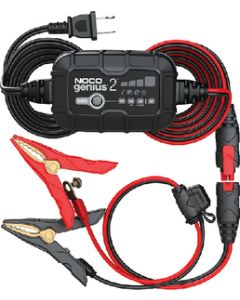
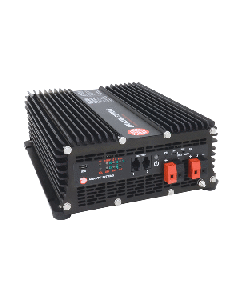
When charging a marine battery it is important to carefully consider many factors. The process of charging marine batteries usually takes place under a variety of environmental conditions. Charging marine batteries is a procedure usually done under electrical conditions with an imperfect sine wave. Buying the right charger is a must, since there is always the risk of overcharging the battery if you are using the wrong charger. Another important issue when charging marine batteries is the configuration of the battery bank during charging.
First identify what type of batteries you have on your boat. Look for some specifics about the batteries and determine the voltage, the battery type and the amp-hour capacity. Typically, in the marine world, you will be dealing with 12-volt systems. The most common battery types are gel, flooded, or AGM.
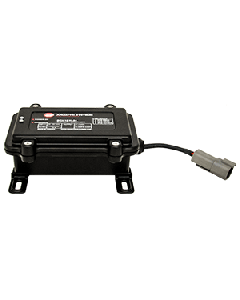
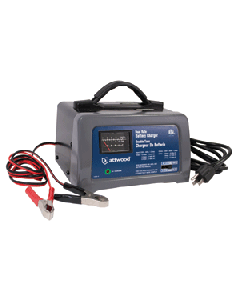
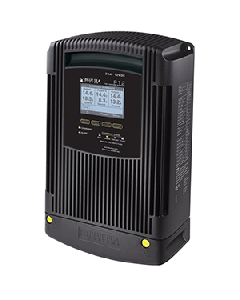
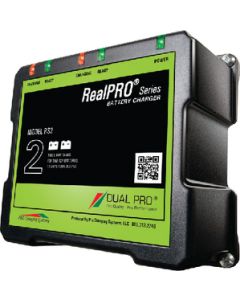
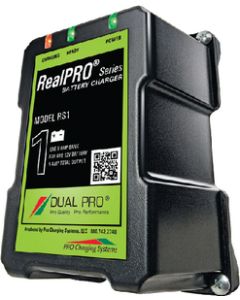
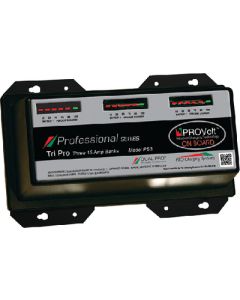
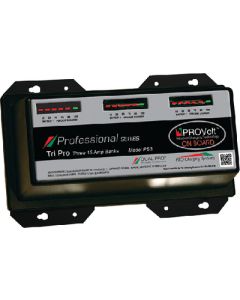
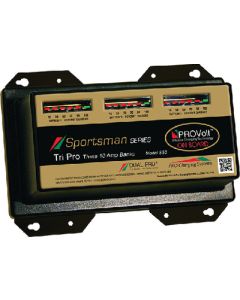
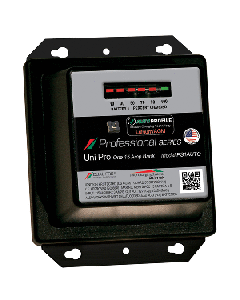
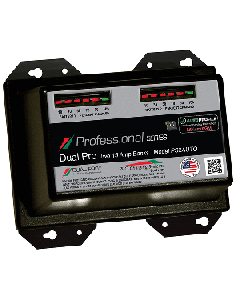
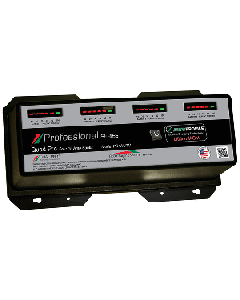
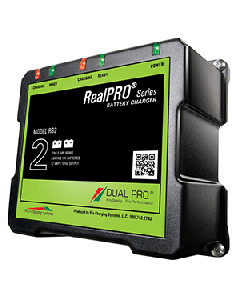
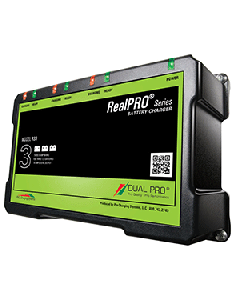
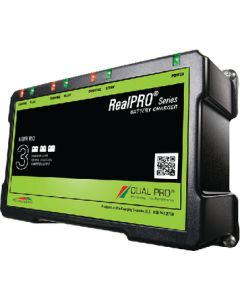
Marine Battery Chargers usually come in single, double, triple and quadruple bank systems and should have independent outputs to charge each battery separately. Be sure the battery charger you purchase is UL listed to Marine 1236 standards and FCC compliant. Choosing a charger that is too large or small for your batteries could damage them.

It is a good idea to purchase a charger that will charge in three stages:
1. Bulk or quick charge mode: This mode gets the batteries charged quickly.
2. Absorption stage: This stage brings your batteries to a full charge.
3. Maintenance charge: This keeps the batteries charged and protects batteries.

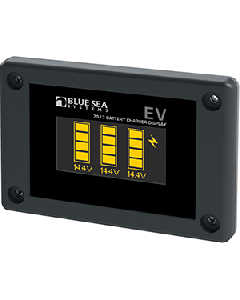
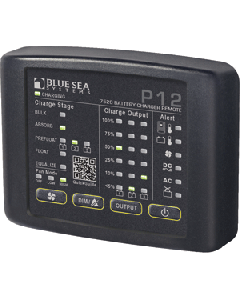
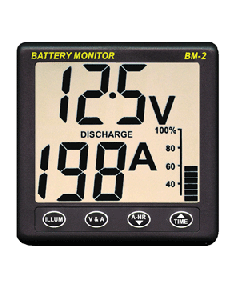
To save engine running time, many boaters recommend charging marine batteries to only 80-85% of capacity. However, you can have a balanced energy system aboard if you install an amp-hour meter or percentage meter. With this meter charging marine batteries will be more practical because you will know how much battery capacity you have discharged. If you install the amp-hour meter, when charging marine batteries your charging time will be more efficient, and you'll rest assured you have enough power to start your engine. When the battery is fully charged, the amp-hour meter will read "0." The meter will let you know when itÕs time to begin charging the battery. Many professionals recommend never discharging the battery below 50% of capacity.
Having an amp-hour meter is important when charging marine batteries because you can also monitor your charging. This means that you can decide how much time you want to spend in the absorption phase to gain how much capacity. When you are charging marine batteries it is a good idea to bring your battery quickly through the bulk state to the absorption phase, and then let the amperage decline to about 10% of your battery capacity.

Many marine battery chargers come with additional features like automatic shut-off when battery is charged, a surge protection loop and indicator lights. When charging marine batteries, these features are definitely a plus.
Purchasing a battery charger according to your needs and taking good care of it will ensure that your batteries last longer, and that you get more use out of them.

HELPFUL HINTS

- Mount the charger in the boat using stainless steel fasteners.
- Make sure on-board charger's waterproof housing is designed for fresh and/or salt water.
- Purchase a charger with automatic temperature compensation. This feature will adjust output depending on the temperature, assuring a fast full charge in any weather conditions.
- Make sure the marine battery charger is vibration resistant and that it incorporates built-in reverse polarity protection.
- Always inspect your marine battery and make sure that the terminals are free of corrosion and that the electrolyte cells are filled.
- Frequently check the battery yourself with a bolt meter.
- Thoroughly brush and clean all terminals. Check the wires to insure that they are in good condition.
- When you buy the marine battery charger always check the return policy. If your battery charger doesn't work, you should be able to return it and receive a prorated amount refund.
- Charging marine batteries is a very important process when you own a boat. Always have in mind that batteries fail when you least expect it, so get the best charger you can afford.

Items 1 to 30 of 186 total

per page
Page:
  1. 1
  2. 2
  3. 3
  4. 4
  5. 5

Grid  List 

Set Descending Direction

Items 1 to 30 of 186 total

per page
Page:
  1. 1
  2. 2
  3. 3
  4. 4
  5. 5

Grid  List 

Set Descending Direction